
The Independent Reporter's Playbook: How to Thrive in the New News Ecosystem

The media landscape is shifting. As large, general-interest news corporations grapple with rising costs and a broad focus, a powerful opportunity is emerging for independent journalists and niche reporting. The future of news is in deeply focused, community-centric coverage, and it's being built by reporters who treat their work not just as a mission, but as a sustainable, audience-first business.
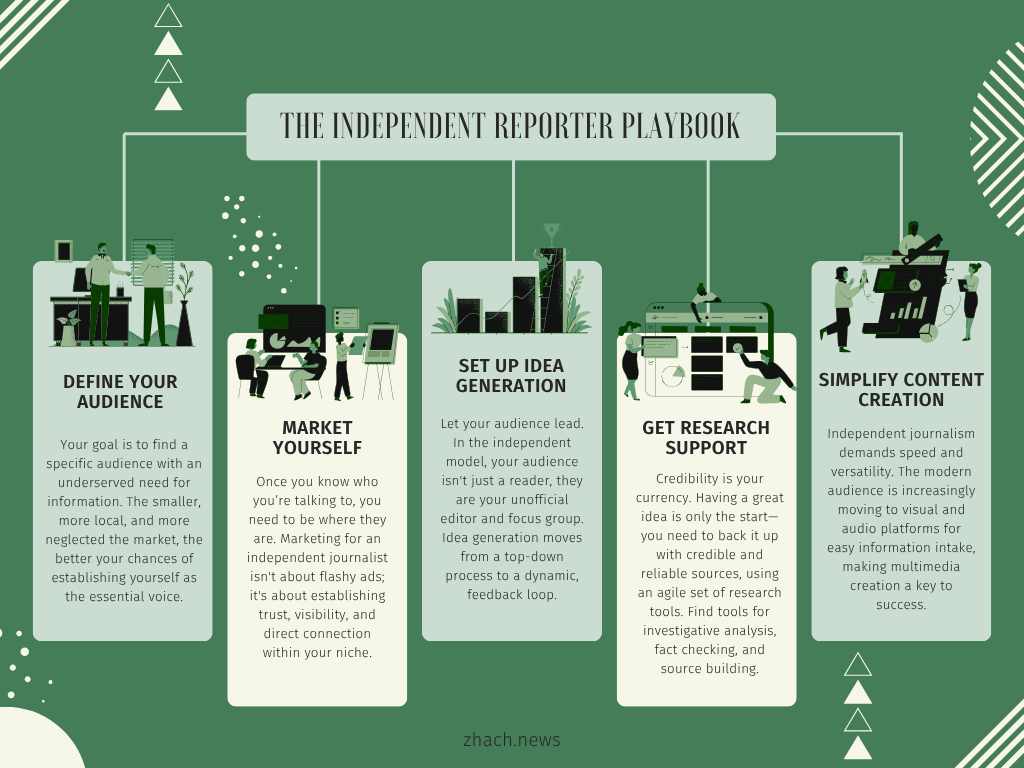
If you're an independent journalist ready to carve out your niche and build a loyal following, here is a playbook for supporting yourself in this new ecosystem.
1. Defining Your Audience: The Small Business Mindset
Your first and most critical step is moving from a generalist reporter to a market specialist. Just like a successful small business, your goal is to find a specific audience with an underserved need for information. The smaller, more local, and more neglected the market, the better your chances of establishing yourself as the essential voice.
Tools for Audience Definition
- Google Trends: Use real-time search data to spot emerging interests and questions related to your beat or community. This tells you what people are actively searching for.
- Google Analytics (for your website/newsletter): Once you start publishing, this is invaluable for seeing basic audience demographics (location, age, gender) and, most importantly, which content they actually engage with.
- Social Media Insights (Facebook/Instagram/X Analytics): These platforms provide demographic and psychographic data (interests, beliefs) about your followers, helping you refine your target persona.
- Survey Tools (SurveyMonkey, Google Forms, Typeforms): These are essential for directly asking your audience about their most pressing news needs and information gaps.
2. Marketing Yourself: Connecting with Your Core Clique
Once you know who you’re talking to, you need to be where they are. Marketing for an independent journalist isn't about flashy ads; it's about establishing trust, visibility, and direct connection within your niche.
- Newsletter Platform (e.g., beehiiv, Substack, Ghost): This is your most valuable asset. It allows you to "own your audience" (control the email list, data, and content distribution) and build a direct, paying relationship through subscriptions.
- Strategic Social Media: Don't try to be everywhere. Focus on the platforms where your target audience lives.
- SEO & Content Optimization: Use tools like AnswerThePublic or BuzzSumo to find the specific questions and headlines that are performing best for your topic, which helps your content appear in search results.
3. Idea Generation: Let Your Audience Lead
In the independent model, your audience isn't just a reader—they are your unofficial editor and focus group. Idea generation moves from a top-down newsroom process to a dynamic, collaborative feedback loop.
- Direct Dialogue: Talk to your audience! Use "Ask" tools (like those from The Coral Project or simple Google Forms) to solicit questions, crowdsource information, and gauge community sentiment.
- Monitor Trends: Use tools like Currents or monitor social media to spot trending topics and breaking news threads specifically relevant to your niche.
- Local Context: View the world through your audience's local or niche lens. For a local audience, a national trend might be interesting, but how it impacts local gas prices or city council legislation is a crucial, high-value story.
4. Research Support: Harnessing Data and AI
Credibility is your currency. Having a great idea is only the start—you need to back it up with credible and reliable sources, using an agile set of research tools.
- Investigative & Document Analysis:
- Pinpoint (Google Journalist Studio): Use the power of AI to quickly search and analyze large collections of documents, audio files, and handwritten notes.
- Google Dataset Search: Find publicly available datasets to support data-driven reporting.
- Verification & Fact-Checking:
- Google Fact Check Explorer and FactCheck.org are essential for scrutinizing claims.
- Source Building:
- Google Scholar: Excellent for finding peer-reviewed studies and academic experts.
- Rolli: A searchable database to quickly find vetted, diverse expert sources.
- Help A Reporter Out (HARO): A mailing list service where you can submit queries to find sources and experts.
- MuckRock: A collaborative system for journalists, researchers, and the public to make requests to access government information.
- AI for Research Assistance: While you should never use a generative AI for reporting facts, tools like Gemini can be powerful for:
- Synthesizing Background Material: Asking for a quick overview or chronology of a complex topic to prepare for an interview.
- Brainstorming Angles: Generating different ways to frame a story for your specific niche.
5. Content Creation: Efficiency and Multimedia
Independent journalism demands speed and versatility. The modern audience is increasingly moving to visual and audio platforms for easy information intake, making multimedia creation a key to success. (underlines are clickable!)
The Power of Video and Audio
Platforms like YouTube, Spotify, and podcasts are crucial. Video and audio allow you to provide depth with ease of consumption. Video, in particular, adds the visual dimension—whether it's showing a local area, displaying a data chart, or simply building a more personal connection with your audience—which helps more accurately and emotionally detail a topic.
Conclusion: You Are the New Publisher
The independent journalist is not just a writer—you are the researcher, marketer, publisher, and chief editor. By adopting an audience-first, business-savvy approach and leveraging the powerful, accessible tools available today, you can not only survive but thrive in this new news ecosystem. Your hyper-focused, fact-checked, and deeply personal coverage is what local communities and niche audiences are hungry for.
Other Links






Comments ()